
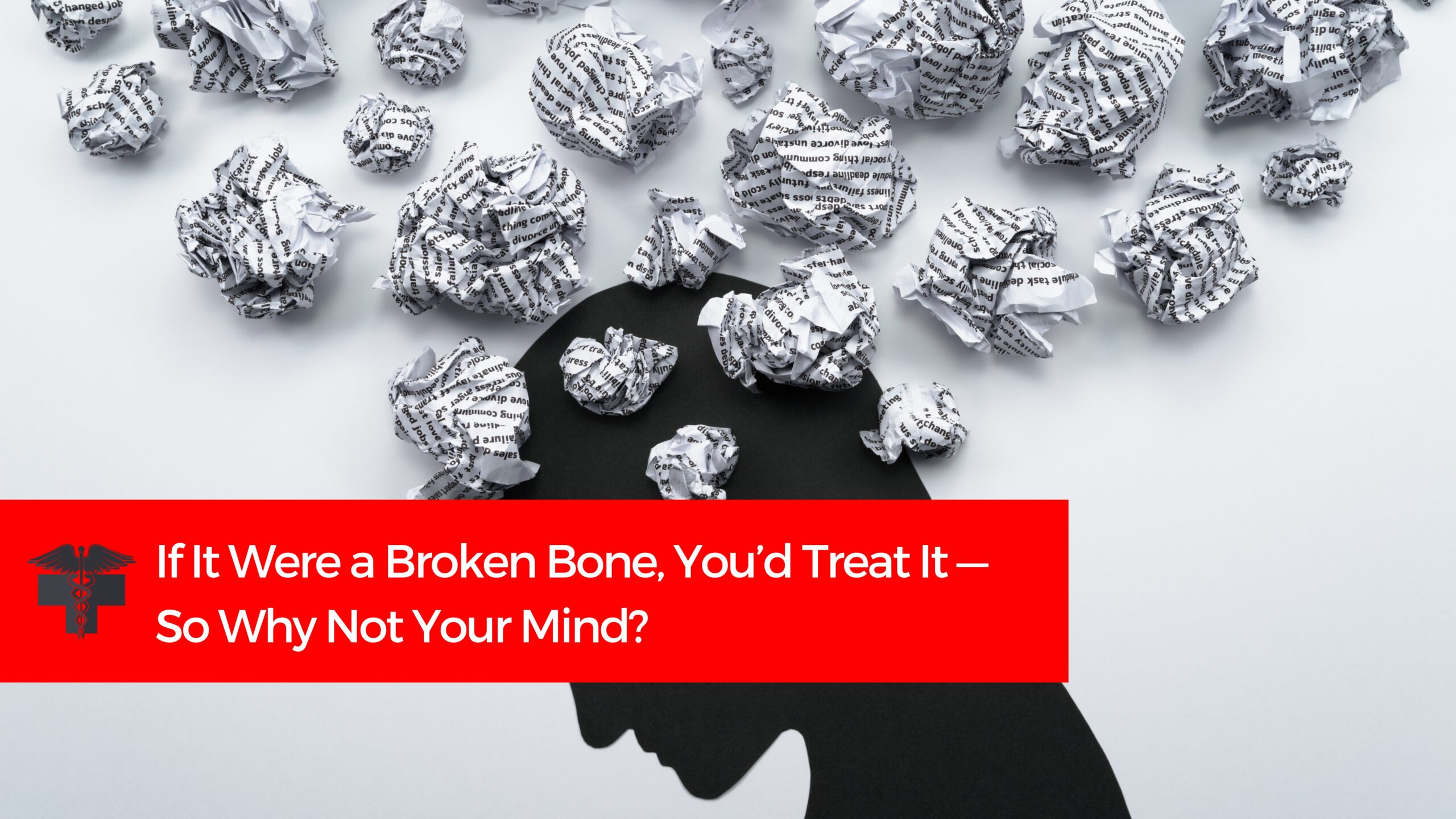
If you broke your arm, you wouldn’t just “get over it.”
If your heart was racing, you wouldn’t tell yourself to “cheer up.”
But when our minds hurt, that’s exactly what so many of us are told to do.
Mental health is health. It’s not weakness. It’s not “drama.” And it’s definitely not something you have to hide.
Every year, millions of people face anxiety, depression, burnout, or emotional pain. But too often, those struggles are dismissed or buried in silence. Just like we respond to physical pain with care, we need to respond to emotional pain with compassion and urgency too.
Why Mental Health Matters
Your mind and body aren’t separate. They’re deeply connected. When mental health suffers, it can impact everything from your energy and focus to your immune system, sleep, digestion, and even heart health.
Unchecked stress, anxiety, or depression can increase inflammation, disrupt hormones, and strain your nervous system. On the flip side, taking care of your mental health can improve your physical health, relationships, and quality of life.
Just like a broken bone won’t heal if ignored, emotional wounds need attention, care, and sometimes professional support.
What Good Mental Health Looks Like
Good mental health doesn’t mean feeling happy all the time. It means having the tools, support, and space to cope, adapt, and heal when life gets hard.
This can include:
- A sense of connection and belonging
- The ability to manage emotions in healthy ways
- Restful sleep and steady energy
- Clearer focus and improved mood
- Feeling safe to talk about what you’re going through
Movement Is Medicine for the Mind and Body
Exercise is one of the most powerful natural tools we have for mental health.
When you move your body, your brain releases endorphins and neurotransmitters like serotonin, dopamine, and norepinephrine. These chemicals help boost mood, lower stress, and sharpen focus. Movement also lowers inflammation and improves sleep quality; two key factors in emotional well-being.
Here’s what the research says:
- Regular physical activity can reduce symptoms of depression by 30% to 50% in many people.
- Just 20 minutes of moderate movement (like a brisk walk) can begin to lower cortisol—the body’s main stress hormone.
- According to Harvard T.H. Chan School of Public Health, walking for an hour a day or running for 15 minutes a day can reduce the risk of major depression by 26%.
- Mayo Clinic reports that exercise can be as effective as antidepressant medication for some people with mild to moderate depression.
Why it works:
Movement tells your brain and body, “I’m safe.” It shifts your nervous system out of fight-or-flight mode and into a calmer, more regulated state. Over time, regular movement builds resilience, improves sleep, boosts confidence, and helps your brain form healthier patterns.
Practical ways to get started:
- Take a 10-minute walk outside after lunch.
- Do a few minutes of stretching or dancing between tasks.
- Join a local fitness class or walk with a friend.
- Find movement that feels joyful—not punishing.
Other Daily Habits That Protect Mental Health
You don’t have to make huge changes overnight. Small, steady habits can make a real difference:
- Prioritize rest — Sleep is one of the most powerful tools for mental clarity and emotional regulation.
- Talk it out — Whether it’s a trusted friend, therapist, or support line, speaking your truth lifts the weight of silence.
- Breathe & pause — Mindfulness, prayer, or deep breathing helps calm your nervous system.
- Nourish yourself — Stable blood sugar and balanced nutrition support a stable mood.
- Set boundaries — Protect your peace by learning to say no and limiting toxic inputs.
Reaching Out Is a Strength, Not a Weakness
Getting support isn’t a sign of failure. It’s a sign of strength. Just as we wouldn’t hesitate to seek medical care for a physical injury, your mind deserves the same urgency and care.
Whether you need a listening ear, counseling, or a safe space to talk through your next steps, support is out there. You’re not alone.
If you need support, we’re here for you: 806-531-3977
If you or someone you love is in crisis, call or text 988 (the Suicide & Crisis Lifeline) for immediate support.
Final Thought
Let’s stop minimizing invisible pain. Let’s treat our minds with the same compassion, urgency, and care we give to every other part of our body.
Because mental health is health. Period.