
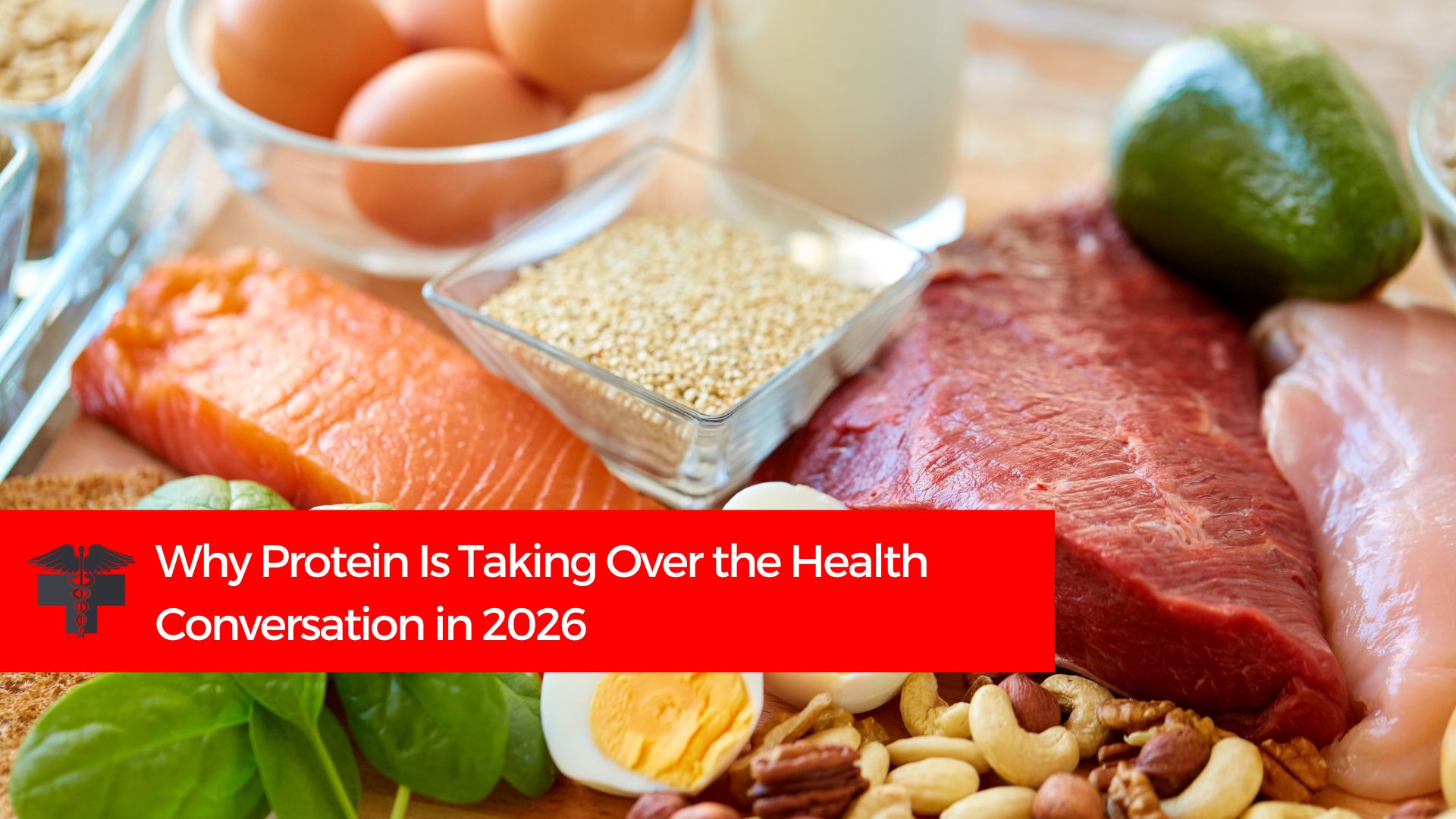
Protein is becoming one of the biggest health conversations of 2026 for many great reasons: it helps build and maintain muscle, supports recovery, and can keep you satisfied between meals. It also gives your body the building blocks it needs to stay strong through every stage of life.
Why Protein Deserves Your Attention
Muscle does much more than help you lift weights. It supports balance, mobility, metabolism, posture, and independence. Because muscle mass can naturally decline with age, eating enough protein becomes increasingly important over time.
A common daily benchmark for healthy adults is about 0.36 grams of protein per pound of body weight. For a 150-pound adult, that works out to roughly 54 grams per day.
That number is a starting point, not a universal prescription. Your needs may change based on your age, activity level, pregnancy, health conditions, and personal goals. Athletes, highly active adults, and people working to build or preserve muscle may benefit from a different target.
Simple Protein Wins That Fit Real Life
You do not need an expensive supplement, a complicated meal plan, or a refrigerator full of specialty foods. Start with meals you already enjoy and make one small upgrade at a time.
1. Give Breakfast More Staying Power
A protein-rich breakfast can help you feel satisfied and energized as you move through your morning.
Try adding:
- Greek yogurt with berries and nuts
- Eggs with whole-grain toast
- Cottage cheese with fruit
- Nut butter stirred into oatmeal
- A breakfast wrap with eggs and beans
Choose one option that feels easy enough to repeat. Consistency creates more value than chasing the “perfect” breakfast.
2. Build Lunch Around a Protein Source
Before deciding on sides, choose the protein that will anchor your meal.
Easy options include:
- Chicken or turkey
- Tuna or salmon
- Lean beef
- Beans or lentils
- Tofu or tempeh
- Eggs
- Greek yogurt or cottage cheese
Add vegetables, fruit, whole grains, or healthy fats to create a balanced meal that keeps you going through the afternoon.
3. Turn Snacks Into Mini Fuel Stops
A snack can do more than quiet hunger for a few minutes. Pairing carbohydrates with protein can make it more satisfying.
Try:
- Apple slices with peanut butter
- Cheese with whole-grain crackers
- Vegetables with hummus
- Greek yogurt with fruit
- A hard-boiled egg with toast
- Roasted chickpeas
- Cottage cheese with pineapple
Keep two or three reliable options nearby so the healthy choice becomes the convenient choice.
4. Spread Protein Across the Day
Many people eat very little protein at breakfast, a moderate amount at lunch, and most of it at dinner. Give your body a steadier supply by including a protein source at each meal.
A simple daily rhythm might look like this:
- Eggs or Greek yogurt at breakfast
- Chicken, tuna, beans, or tofu at lunch
- Cheese, hummus, or nut butter with a snack
- Fish, lean meat, lentils, or tempeh at dinner
No complicated tracking is required to begin. Look at your plate and ask, “Where is my protein?”
5. Use Food First and Supplements When Helpful
Protein powders can be convenient, especially during busy days or after workouts. They are optional tools.
Everyday foods provide protein along with vitamins, minerals, fiber, and other valuable nutrients. Eggs, dairy products, fish, poultry, lean meats, soy foods, beans, lentils, nuts, and seeds can all help you reach your goal.
Find The Amount That Works For You
More protein is not automatically better. Your ideal intake is personal, and your overall eating pattern still matters.
If you have kidney disease, another medical condition, or questions about how much protein is appropriate for you, speak with your healthcare provider or a registered dietitian before making a major change.
Start today with one simple win. Add protein to breakfast, strengthen your usual lunch, or prepare a satisfying snack for tomorrow.
You do not need to transform your entire diet overnight. Build one dependable habit, repeat it, and let every protein-powered choice become another step toward a stronger, healthier you.