
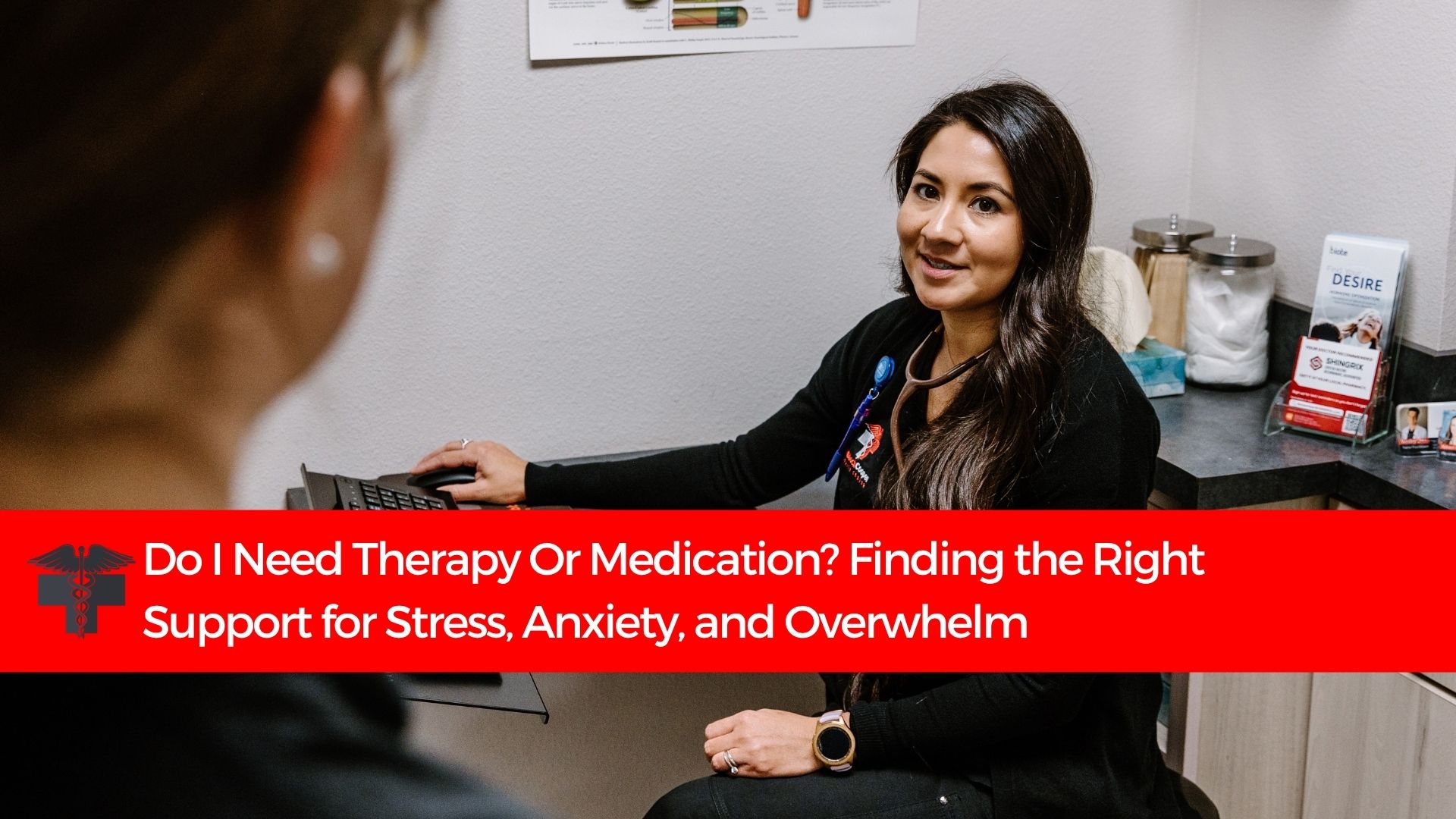
You don’t have to keep pushing through stress just to prove you’re strong. There’s a smarter, lighter way to feel like yourself again.
A lot of people reach a point where stress, anxiety, or emotional overload starts bleeding into everyday life. Sleep gets worse. Focus slips. Small things feel bigger than they should. You start wondering, Do I need therapy… or medication… or something else?
That question can feel heavy. But it’s also the moment things can start changing.
What’s Really Happening?
Nearly 1 in 5 adults deal with mental health challenges each year. Yet many wait far too long to get support. Not because they don’t care, but because they don’t know where to start or what actually works.
Stress builds quietly. It shows up as overthinking, irritability, low energy, or feeling constantly on edge. Over time, it affects your work, your relationships, and your sense of control.
Here’s the part most people don’t realize:
You don’t need a perfect answer before taking your first step.
It’s not therapy or medication. It’s a toolkit.
Instead of thinking in terms of one solution, think in terms of support systems that work together.
Therapy helps you understand and change patterns.
You learn what’s driving your stress and how to respond differently. You build skills that stay with you long-term.
Medication can help stabilize what feels overwhelming.
If your sleep, focus, or day-to-day functioning is being affected, it can help create a baseline where things feel manageable again.
But those aren’t your only options.
Some of the most powerful shifts come from combining different types of support.
Other Options That Can Make A Teal Difference
Lifestyle support is the foundation most people overlook.
Consistent sleep, regular movement, and stable nutrition directly impact your mood and energy. Small changes here often create fast relief.
Coaching or structured programs give you direction.
If you feel stuck but not necessarily in crisis, having guidance and accountability can help you move forward without overthinking every step.
Support groups remind you you’re not alone.
Connection reduces pressure. Hearing others share similar struggles can instantly lower the intensity of what you’re feeling.
Mind-body practices calm your system, not just your thoughts.
Breathing exercises, mindfulness, or movement-based practices help your body come out of that constant “on edge” state.
Self-guided tools help you build awareness.
Journaling, apps, or books can help you understand your patterns and give you simple ways to manage stress daily.
Medical checkups can uncover hidden factors.
Sometimes fatigue, anxiety, or mood shifts are connected to things like hormones or nutrient levels. It’s worth ruling that out.
How To Know What You Need
You don’t need a diagnosis to start paying attention to your experience.
Ask yourself:
- Am I overwhelmed more often than not?
- Is my stress affecting my sleep or focus?
- Do I feel stuck in the same patterns?
- Is this impacting my work or relationships?
If the answer is yes to any of these, that’s enough reason to explore support.
Not later. Now.
What Actually Helps You Move Forward
Most people wait until they feel completely sure before taking action.
That’s what keeps them stuck.
You don’t need certainty. You need a starting point.
- Talk to a therapist and see how it feels
- Speak with a doctor if symptoms feel intense
- Try a support group or structured program
- Start small lifestyle changes that lower your daily stress
You’re not locking yourself into one path. You’re building your own system.
Small Shifts You Can Start Today
While you figure out what kind of support fits you best, these simple actions can immediately lower the pressure:
- Set one daily moment that’s just for you, even if it’s short
- Reduce input that overwhelms you, like constant scrolling
- Write down what’s stressing you instead of holding it in your head
- Focus on consistency instead of trying to do everything perfectly
These aren’t massive changes. They’re small wins that rebuild your sense of control.
You don’t have to earn support.
You don’t need to hit a breaking point.
You don’t need a dramatic reason.
You don’t need to justify how you feel.
If something feels heavy, off, or harder than it should be, that’s enough.
The Real Takeaway
The question isn’t therapy or medication.
The real question is: What combination of support will help me feel better and function better?
And the only way to answer that is to start.
You’re not overreacting. You’re paying attention. Take the first step, start the conversation, and begin building a version of support that actually works for you.



 and then