
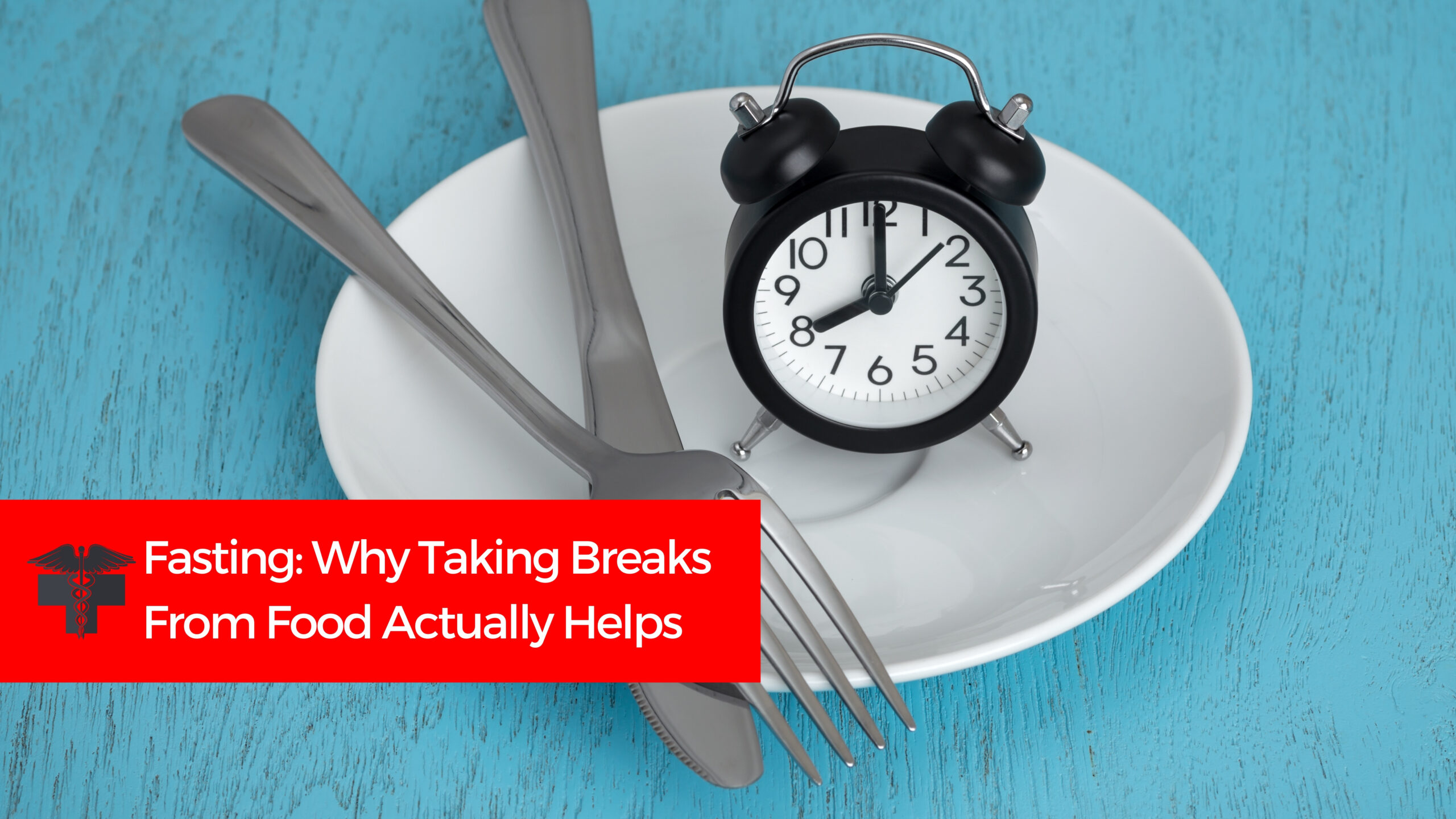
Let’s clear something up right away: fasting is not starving.
It’s simply choosing not to eat all the time.
Most of us snack, sip, and graze from morning to night. Even when we’re not sitting down for full meals, our bodies are still working nonstop to digest food. When digestion never gets a break, neither does your metabolism.
Taking intentional breaks from food gives your body space to reset.
Your Body Wasn’t Meant To Digest 24/7
One of the first systems that benefits from food breaks is insulin. Every time we eat, insulin rises to help move sugar from the bloodstream into cells. When we eat constantly, insulin stays elevated, which over time can make it harder for the body to regulate blood sugar efficiently.
Giving insulin a break helps improve blood sugar balance. That can mean steadier energy, fewer crashes, and better long-term metabolic health.
Learning To Use Different Fuel
With longer breaks between meals, your body also gets better at switching fuel sources.
Instead of relying only on sugar from recent meals, it becomes more flexible and can tap into stored fat when needed. This metabolic flexibility supports more consistent energy throughout the day and, for some people, healthier weight management.
This isn’t about forcing fat loss. It’s about helping your body remember how to use the fuel it already has.
Your Body’s Built-In Maintenance Mode
Another fascinating benefit of fasting is something called autophagy.
Think of autophagy as your body’s cleanup crew. When you’re not constantly digesting food, your cells have time to repair damage, recycle old parts, and work more efficiently. This process supports overall cellular health and is one reason researchers are so interested in the long-term benefits of fasting.
What People Often Notice
Many people who experiment with intentional food breaks report:
- Fewer energy crashes
- Better focus and mental clarity
- Improved digestion
- A calmer relationship with food
Not because they’re eating less but because they’re eating more intentionally.
This Is Not About Extremes
Let’s be clear about what fasting is not.
- It’s not restriction
- It’s not punishment
- It’s not skipping meals to be “disciplined”
- And it’s definitely not about ignoring hunger
Fasting is about timing, not deprivation. It’s about giving your body the rest it needs to do its job well.
How To Start (If You’re Curious)
You don’t need to jump into anything intense.
For many adults, a simple 12–14 hour overnight fast is a great place to begin. That might look like finishing dinner earlier in the evening and having breakfast a little later the next morning.
Small changes add up.
And as always, talk with your doctor before making changes especially if you are pregnant, breastfeeding, have a medical condition, or take medications.
Your body is smart. Sometimes it just needs a little breathing room.




 and then