
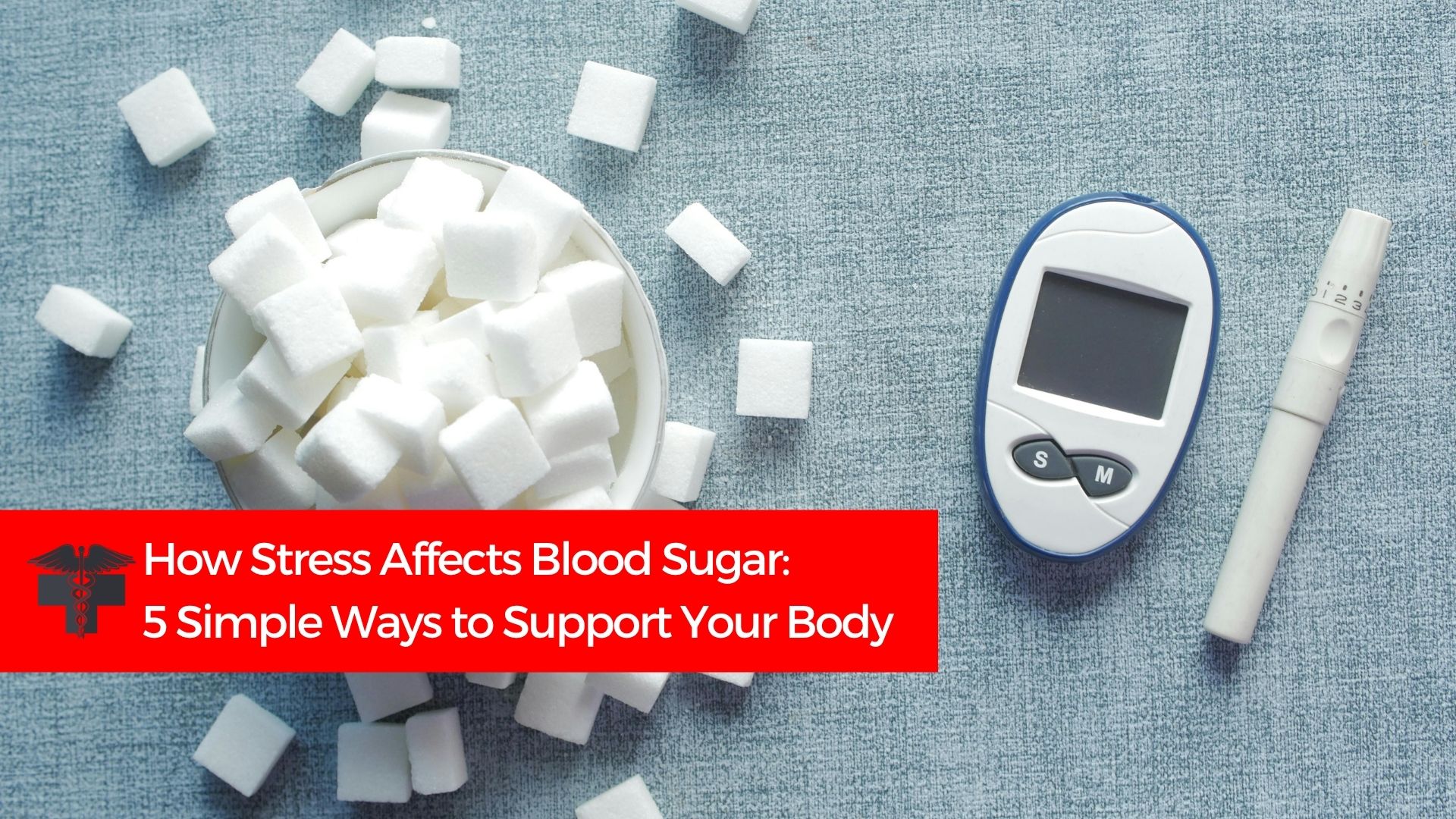
Most people think about food first when they think about blood sugar.
And yes, food matters.
But it is not the whole story.
One of the biggest things people overlook is stress. If you have ever felt like you were doing “everything right” with food and still not seeing the progress you hoped for, stress may be part of the picture.
That is not you failing.
That is your body responding the way it was designed to.
Stress And Blood Sugar Are More Connected Than Realized
When your body feels stressed, whether that stress is emotional, mental, physical, or even from lack of sleep, it shifts into a survival response.
That means it starts releasing stress hormones like cortisol and adrenaline. Those hormones tell your body:
“We may need energy fast.”
So your body responds by releasing more sugar into your bloodstream for quick fuel. No meal required.
That means your blood sugar can be affected by:
- Emotional stress
- Poor sleep
- Overwhelm
- Anxiety
- Constant busyness
- Skipped meals
- Physical illness or pain
So if you have been blaming yourself because your energy feels off, your cravings are worse, or your blood sugar feels harder to manage, this may be an important missing piece.
Why This Can Feel So Frustrating
A lot of people assume that if their blood sugar is acting up, they must be doing something wrong with food.
That is where the guilt starts. You may be trying harder, cutting back more, skipping things you enjoy, and still feeling stuck. But when stress is high, your body may be working overtime behind the scenes, even if your meals look “perfect” on paper.
That is why blood sugar support is not just about discipline. It is also about regulation. It is about helping your body feel safe enough to stop sounding the alarm all day long.
The Good News: You Can Work With Your Body
You do not have to overhaul your life overnight. And you do not need a “perfect” routine to start helping your body respond differently. Small, steady habits can make a real difference.
Here are a few simple ways to support your blood sugar when stress is high:
1. Take a 10-Minute Walk After Stressful Moments
This is one of the most underrated things you can do. When stress causes extra sugar to be released into your bloodstream, movement helps your muscles use that sugar for energy instead of letting it sit there. It does not have to be a full workout.
A short walk after:
- A stressful meeting
- A hard conversation
- A chaotic afternoon
- A frustrating day
…can help more than people realize. Think of it as helping your body complete the stress cycle.
2. Breathe Like It Matters, Because It Does
When you are stressed, your body often stays stuck in “go mode.” Your breathing gets shallow. Your nervous system stays activated. Your body keeps acting like the emergency is still happening. A simple breathing reset can help signal safety back to your system.
Try this:
- Inhale for 4
- Hold for 4
- Exhale for 6
Repeat that 5 times.
It is simple, but powerful. And no, it does not have to be fancy to be effective.
3. Eat Consistently
Skipping meals can make stress responses stronger. When your body goes too long without fuel, it can add another layer of stress and make blood sugar swings worse later.
That can lead to:
- Energy crashes
- Irritability
- Cravings
- Feeling shaky or drained
- Overeating later in the day
Eating consistently does not mean eating perfectly. It means giving your body regular support instead of waiting until it is running on fumes.
4. Protect Your Sleep Like It Counts, Because It Does
Even one poor night of sleep can affect stress hormones the next day. That means sleep and blood sugar are more connected than most people think. When you are under-rested, your body often has a harder time managing:
- Hunger cues
- Cravings
- Energy
- Mood
- Blood sugar balance
You do not need a perfect bedtime routine to start improving this. Try starting with one simple goal:
- Go to bed 30 minutes earlier
- Put your phone down sooner
- Keep your room cooler and darker
- Cut back on overstimulation before bed
Better sleep supports better regulation.
5. Build Calm Breaks Into Your Day Before You Need Them
A lot of people wait until they are overwhelmed to slow down. But the truth is, your body responds better to small moments of regulation before things spiral.
That might look like:
- Sitting in silence for 2 minutes
- Stretching between tasks
- Stepping outside for fresh air
- Drinking water without multitasking
- Taking 5 deep breaths before answering the next text, email, or demand
These little moments matter. They tell your nervous system:
“We are okay right now.”
And over time, that can help your body carry stress differently.
Your Body Is Not Broken
This part matters. If stress has been affecting your blood sugar, energy, cravings, or mood, that does not mean your body is broken. It may actually mean your body is responding exactly the way it was built to.
The problem is not always that your body is “wrong.” Sometimes your body is just carrying more than people can see. That is why healing often starts with support, not shame.
Supporting Blood Sugar Is About More Than Food
Food matters. Movement matters. Sleep matters. But so does what your body is holding every single day.
If you want to support your blood sugar, you may need to look at more than just what is on your plate.
You may also need to look at:
- Your stress load
- Your sleep
- Your pace
- Your nervous system
- Your daily recovery
That is not weakness. That is whole-person health.
Start With One Small Shift
You do not have to fix everything today. You do not need a perfect plan. Start with one small change:
- A 10-minute walk
- One consistent meal
- Five slow breaths
- Going to bed a little earlier
- A 2-minute calm break before your next task
Small shifts count. And if something feels off, or you are concerned about your blood sugar, energy, or overall health, talk with your doctor before making changes.
You do not have to figure it out alone.